
National AT [Assistive Technology] Awareness Day is this Wednesday, April 22. National Speech-Language-Hearing Month begins next week. We recognize both today, with a look at AAC and why families shouldn’t hesitate to consider it.
Augmentative and alternative communication (AAC) tools make great assistive technology, but not everyone understands their value. Often, the core problem is “speechism”—bias that says verbal speech is the best form of communication, and any other approach is a last resort. Hence the best-known negative misconception about AAC:
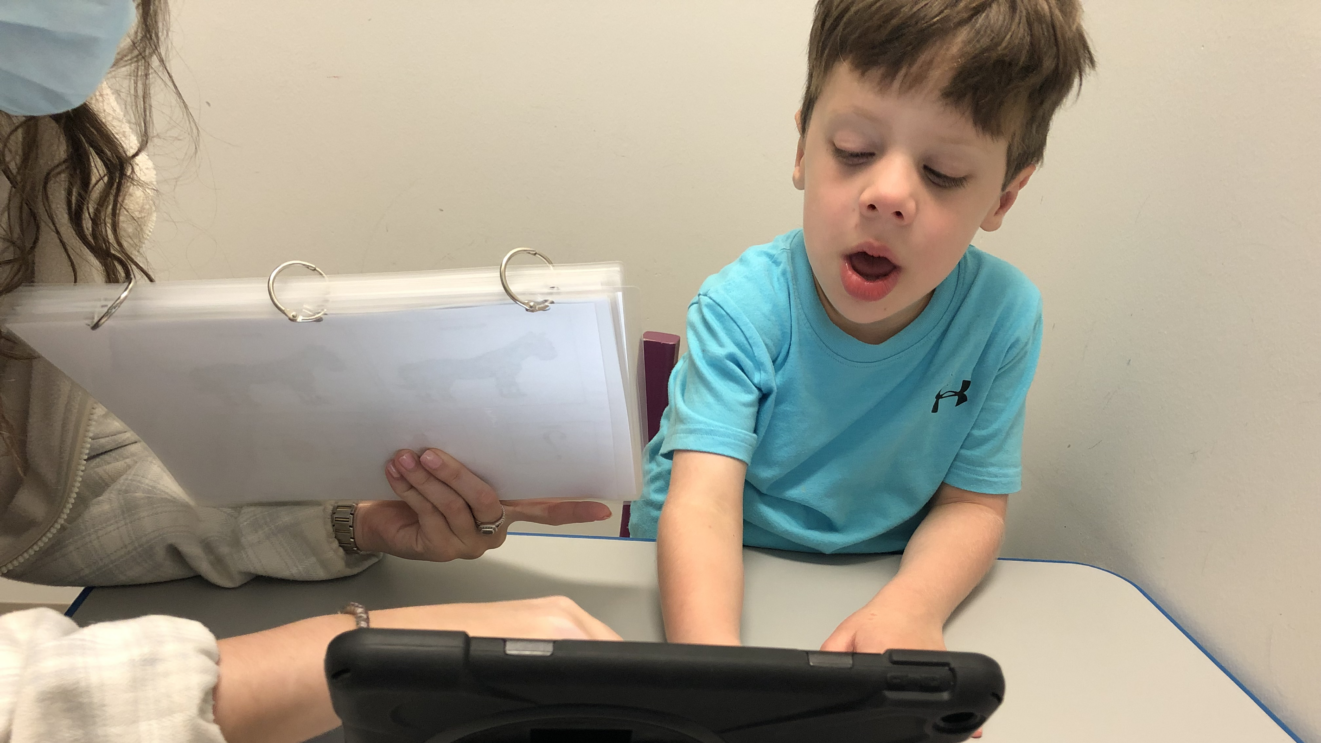

False belief #1: Giving AAC to young children with speech disabilities will hurt their chances of learning to talk verbally.
Truth: Research shows the opposite: early introduction to AAC improves chances of mastering verbal speech. Developing brains have little trouble grasping multiple forms of communication: consider how many “typically abled” children are raised in bilingual environments, and grow up speaking both verbal languages with equal fluency.
False belief #2: AAC is only for completely nonverbal people.
Truth: There are many “partially verbal” people who benefit from AAC:
- People prone to verbal fatigue, because typical talking takes extra physical and/or mental effort.
- People who have difficulty pronouncing complicated words or putting complicated thoughts into words.
- People with speech that new/casual acquaintances find hard to understand.
And while many people with speech disabilities do talk verbally with family and close friends, that can feed another harmful assumption:
False belief #3: No one needs AAC to talk with people who already understand them verbally.
Truth: Understanding basic communication (e.g., simple requests) doesn’t always mean understanding everything. The person whose family thinks they “talk to us just fine” may be quietly despairing over an inability to put deep feelings into words.
False belief #4: A person whose existing verbal skills are damaged (e.g., by a stroke) should spend time in verbal-speech therapy before considering AAC.
Truth: Although adults don’t learn/relearn language as easily as children do, the same principle applies: AAC doesn’t hurt verbal-speech development—often, it helps. Plus, working to regain a lost skill can be painful and frustrating; having an alternate method relieves some stress. (See “Too Soon for AAC after Stroke Myth,” from Tobii Dynavox.)
Finally, an unfortunate “practical” misconception that has kept many families from exploring AAC:
False belief #5: AAC is too expensive to buy and too complicated to learn.
Truth: First, not all AAC is complicated, or even high-tech. AAC can be fancy text-to-speech devices; but it can also be basic smartphone apps, digital or hard-copy picture boards, American Sign Language, or pencil and paper. Or even such everyday gestures as pointing to the flower arrangement you’re verbally asking someone to look at.
As for cost, many AAC apps are downloadable at little or no charge. And if you need something more expensive, insurance or other disability benefits cover many assistive devices.
Want to learn more about specific AAC tools and finding what works for your family? BridgingApps’ Assistive Technology Lab can help. Give us a call or drop an email: we’d love to meet you!
Additional resources: