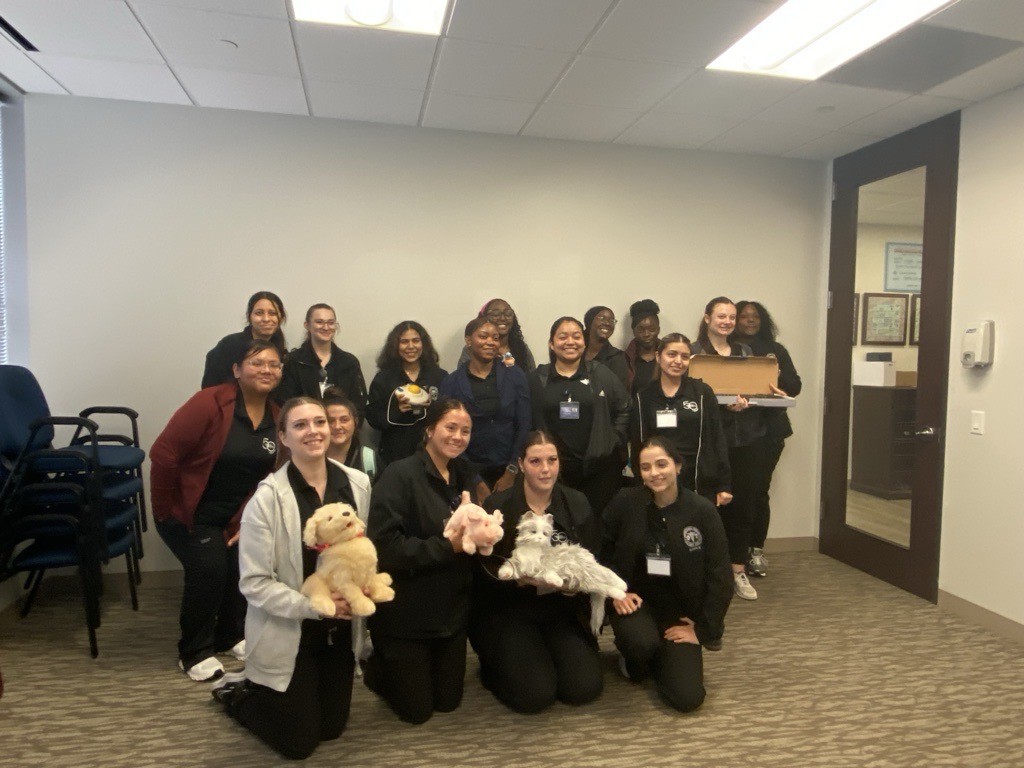
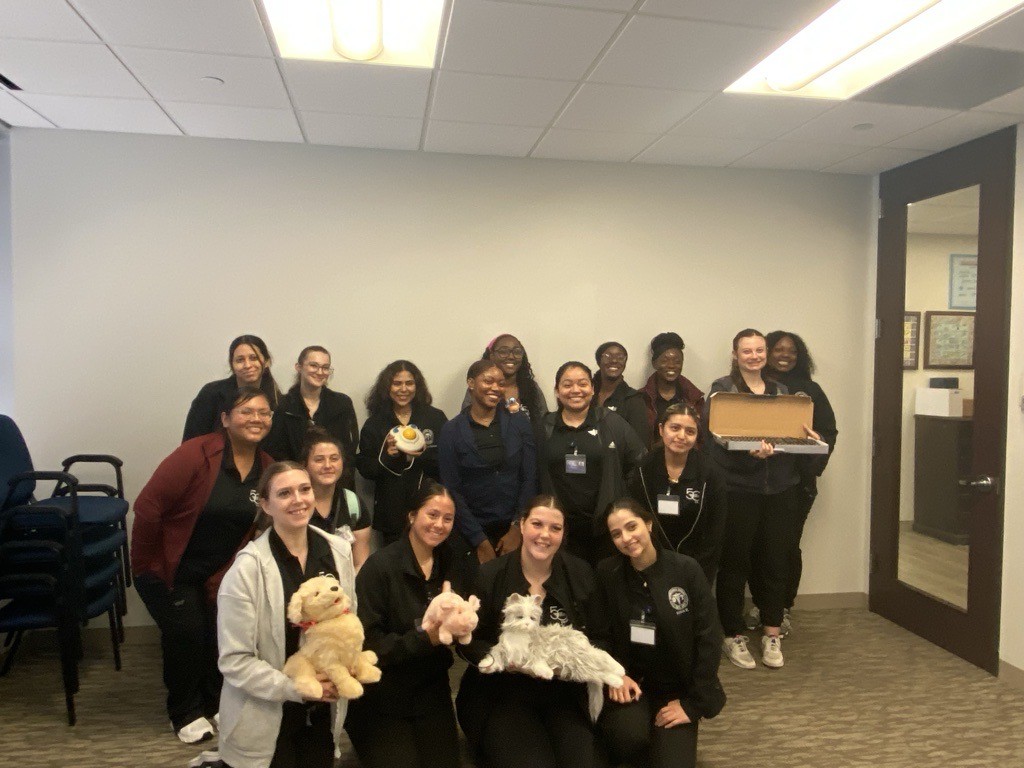
On Monday, June 15, a group of Pima Medical Institute students under the leadership of Dr. Kyra Gainous (Occupational Therapy Assistant Program Director at Pima) visited our Assistive Technology Lab at Loop Central. Alejandra Gonzalez, our BridgingApps Digital Navigator, shares today about that visit.
Dr. Kyra first contacted me at the end of 2025. She had scheduled an Assistive Technology (AT) course for the spring semester, with sixteen students registered, and wanted to bring this class for a tour of our AT lab so they could learn about occupational-therapy (OT) technology.
When the tour took place, we were pleased to see that all sixteen students showed up. Half of them were first sent to Daryn Ofczarzak’s AAC presentation in the lab (Daryn is a BridgingApps team member and a speech language pathologist). She helped them explore different communication options, including an eye-gaze device.
The second half of the group stayed with me, in the main Easter Seals office upstairs. I shared information on the BridgingApps program, our App Search Tool, and our TexasYouth2Adult website. These students also got to test various AT tools, including:
- A large-print keyboard
- Different computer mice
- A BIG Candy Corn switch
- A HumanWare explorē 8 magnifier
- A Pocketalker sound-amplifying device
- Two OrCam devices
- Joy for All toy animals
All the students had tons of questions, and they were very excited to see how many technologies were available for their future clients. The tour went so well that we’ve made plans to host another one next semester.
About Pima Medical Institute
The original Pima Medical Institute was founded in 1972 in Tucson, Pima County, Arizona. It now has sixteen campuses in seven states (Arizona, Washington, California, Nevada, Colorado, New Mexico, and Texas); the Houston campus is located at 11125 Equity Drive east of Bear Creek.
Pima’s website slogan is “Develop Medical Skills and Life Skills.” It offers training in a variety of fields, including dental and veterinary careers.
What Is Occupational Therapy?
In case you’re wondering, occupational therapy is not the same thing as career coaching or job training. “Occupation” in this context means ordinary, quality-of-life activities, which can include job duties or chores, but also self-care tasks such as bathing, grooming, dressing, eating, and exercising—plus hobbies and recreational activities. Hence, an occupational therapist is a professional whose job may include:
- Recommending assistive technology
- Recommending accommodations for living and work environments
- Evaluating a patient’s ability to perform tasks
- Guiding a patient through exercises to learn/relearn everyday occupational skills
While some of the exercises may resemble physical therapy, a true physical-therapy specialist is trained in exercises and hands-on techniques that go beyond an occupational therapist’s expertise. It is not uncommon for a stroke or injury survivor, or someone else with treatable disabilities, to have both a physical therapist and an occupational therapist.