Hodari Patton is a BridgingApps client, who has experienced mental health challenges and a schizophrenia diagnosis. He first connected with us in September 2025, through digital-learning classes at Fort Bend CONNECT and Hope Fort Bend Clubhouse. Anna Gonzales, Executive Director at the Clubhouse, was a big help in introducing him to our programs.
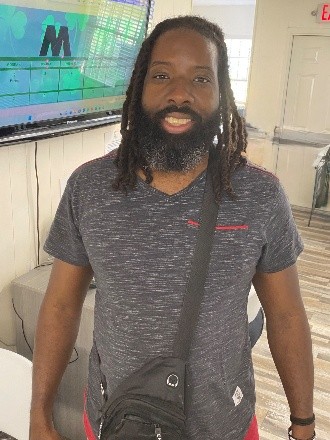
Hodari loves playing basketball and making music. He also received a laptop and digital skills training in our 2025 digital-literacy classes.
Q: What do you like best about having your own device?
Hodari: It’s changed daily life tremendously. It lets me create music; and music is my second passion. (My first passion is basketball.) Music calms me down: it helps me get out what I’m thinking. If I’m going through something, I can talk about it in my music. I call it “reality rap,” a coping strategy for keeping up mental well-being.
With the laptop, I can wake up at two in the morning, eight in the morning, or anytime at night—and if I feel the urge to create music, I can get up and do it. I go to the Soundtrap website to create beats.
[Technical notes: After using the laptop to create beats, Hodari adds vocals in a studio, to avoid cluttering the laptop’s memory. Pre-laptop, his primary music-production tools were drum pads and MIDI keyboards. He still uses hardware some, but prefers technology for convenience and better sound quality.]
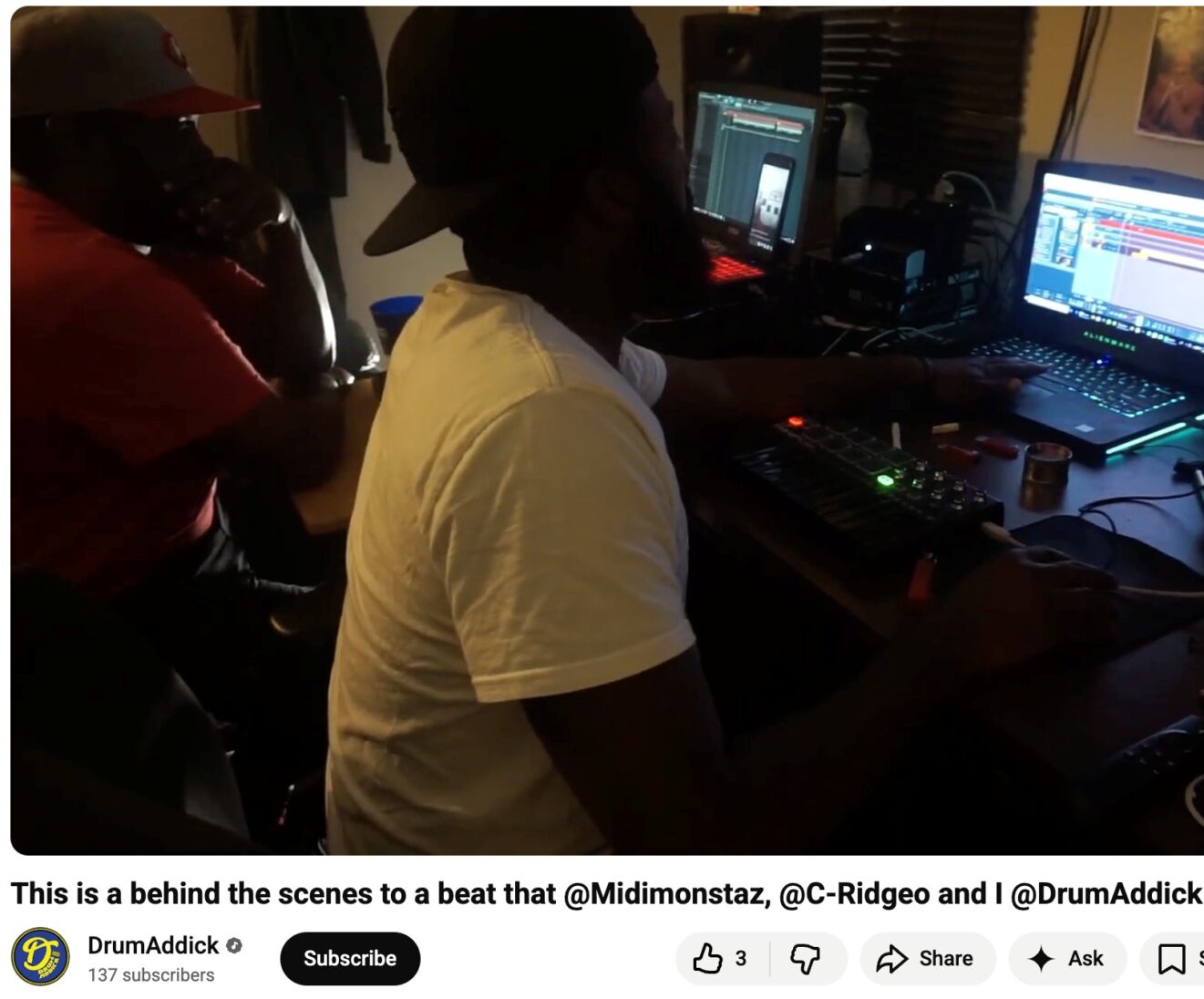
[Sample clip of Hodari’s music] [Hodari’s YouTube channel, DrumAddick]
Q: Along with the laptop, you received a separate wireless keyboard, and a wireless mouse. How have these been helpful?
Hodari: They’re great. I especially like the mouse, because it’s different from the laptop’s trackpad—the mouse is a little easier to use.
Q: What else are you doing with the laptop?
Hodari: Well, I send emails, I read emails, I do Zoom meetings. I collaborate with other music producers, virtually. I remember when I hopped on Zoom with a producer I know—and when the ten minutes we’d set for that meeting ran out, we just jumped to Google Meet. On my laptop, I was able to see what he did.
Q: Speaking of shared activities, you first connected to BridgingApps through the Hope Fort Bend Clubhouse, which emphasizes shared work opportunities for individuals with mental health conditions. You said that the technology training and sense of community have been crucial to your personal growth. Is there anything else you’d like to share about the Clubhouse?
Hodari: It helped me get out of isolation and start moving forward with other people. It’s full of opportunities to learn, to do as much as you can.
Q: And they helped you earn your food handler’s permit.
Hodari: Yeah, I got it there. At Fort Bend Clubhouse, you cook for not just the staff, but for the other Clubhouse members.
Q: What do you want others to know about assistive technology?
Hodari: It can help you get through hard times. It may be hard itself at first; but stick with it. The more you use it, the more enjoyable it becomes.