
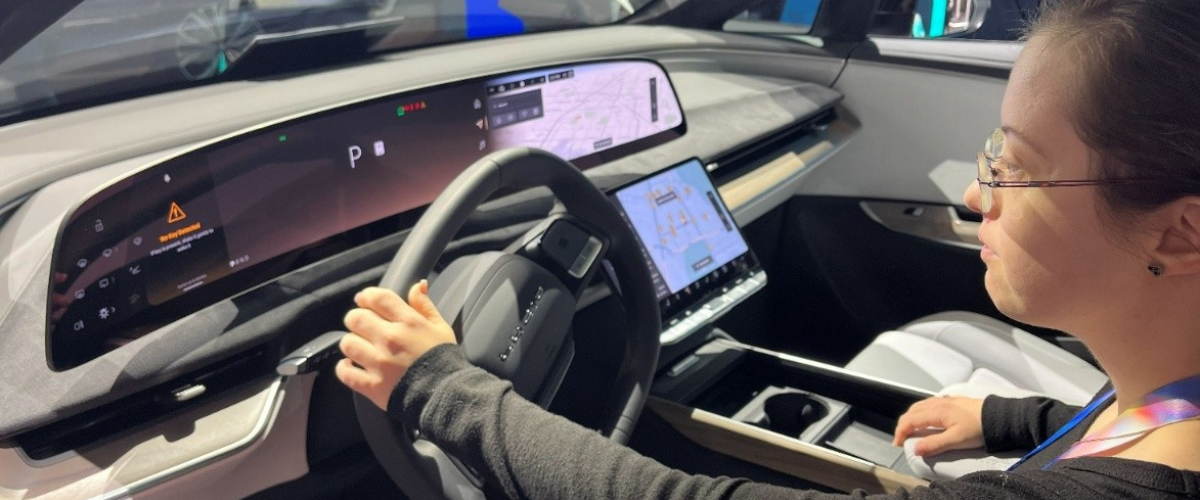
Article #3 on the 2026 Consumer Electronics Show (CES). Three of our BridgingApps team members, plus one client family, attended this year:
- Cristen Reat, BridgingApps Co-Founder and Program Director
- Tara Rocha, Digital Learning Specialist
- Alejandra “Ale” Gonzalez, Digital Navigator
- Michael, Blanka, and Sarah Brhlik
The Show included over 4,100 exhibitors, only a handful of which can be mentioned here. Below, we highlight several of our group’s favorites. (See also the lists in our earlier CES posts, “Starting the Year Off Right: CES 2026” and “Expanding Inclusiveness and Accessibility.”)
AI Is Everywhere
But first, a note on artificial intelligence (AI) and its key role in the latest innovations. Most people know about ChatGPT and other idea/suggestion-generating tools; but AI is also found in:
- Digital calendars, shopping organizers, and fitness trackers
- Smart thermostats, TVs, and doorbell cameras
- Robot vacuums, delivery drones, and self-driving cars
- And most other everyday technologies
“Basically, everything that we saw had AI. Every second booth had some sort of robot.” –Ale
“Artificial Intelligence was what everybody was talking about. I can’t wait to learn more about it and start using it. Technology has a tremendously positive impact for my daughter [Sarah] with Down Syndrome. Today’s accessibility allows her to be independent and participate in daily life to a degree almost unimaginable a decade or two ago.” –Blanka
What Else Is New?
The following list includes several memorable technologies from the CES Expo and sessions. (Note that many of these were prototypes, not yet available on the consumer market. Check their website links for release schedules, prices, and frequently asked questions.)
- Dialogue Boost, a new Amazon Prime Video feature that allows users to turn up the audio on dialogue only, eliminating the problem of sound effects drowning out spoken words.
- DreamPhones, a noise-cancelling-headphones option that “massages” the ear electrically, helping the user to relax and fall asleep. Also reads heart rate and other “stress signals” to adjust massage to the user’s needs.
- Flowtica Scribe, a writing pen (with app) that uses AI to organize handwritten notes into detailed summaries. Allows users to pay more attention to live events while taking fewer notes.
- Glydr, a foot controller for gamers who have difficulty using their hands for intense activities.
- iGuard, a fire-safety technology that shuts off untended stoves after five minutes.

- Tactus, which uses sensors in a jacket or vest to “translate” music into physical vibrations for Deaf wearers.
- Unicorn Blocks, a toy that combines AI-generated storytelling with physical blocks to encourage imaginative play for children ages 3–8. Compatible with Legos.
(Also: AI-companionship producer JoyCalls and smart-monitoring provider GrandCare, both of which have recently shared demos with BridgingApps. More about these in our upcoming article, “For Disabled Family Members Living Alone.”)
“Autonomous vehicles, intelligent assistants, and smart appliances have the potential to greatly expand Sarah’s independence at home and at work.” –Michael
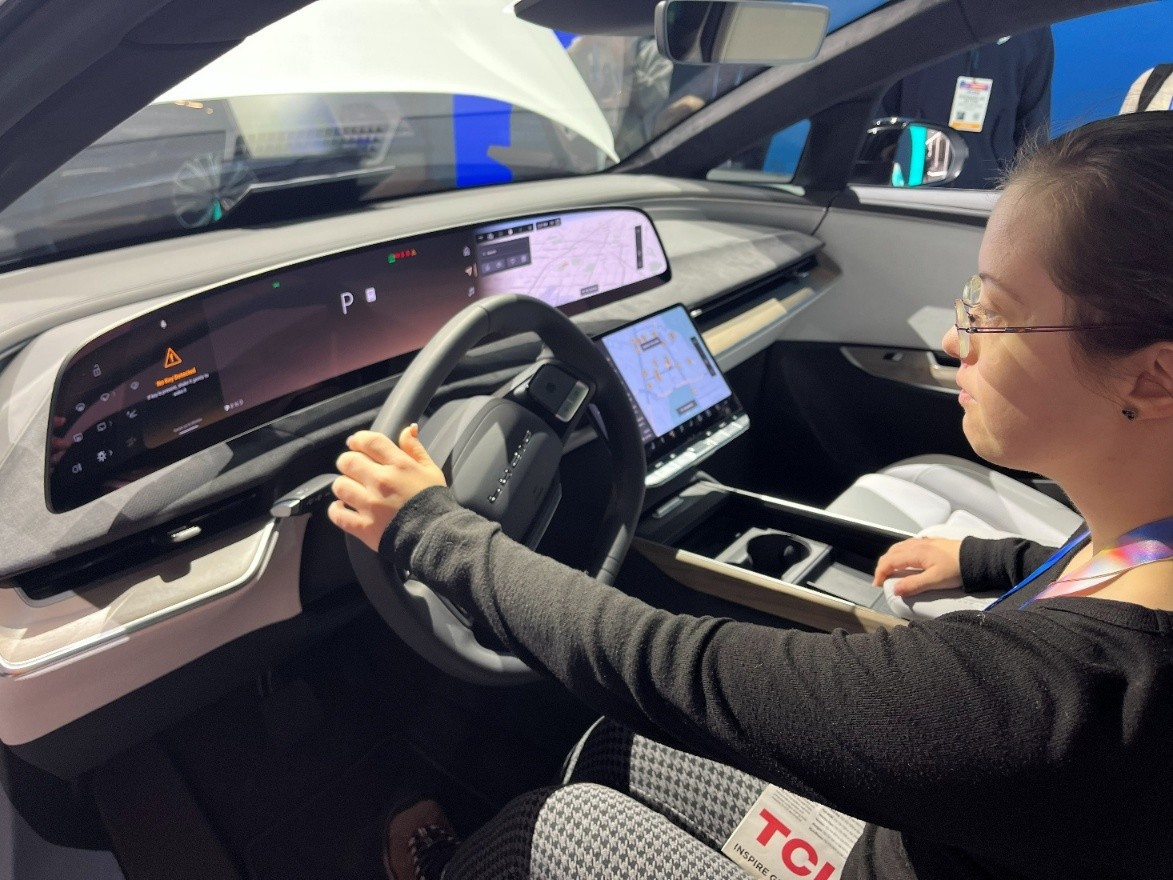
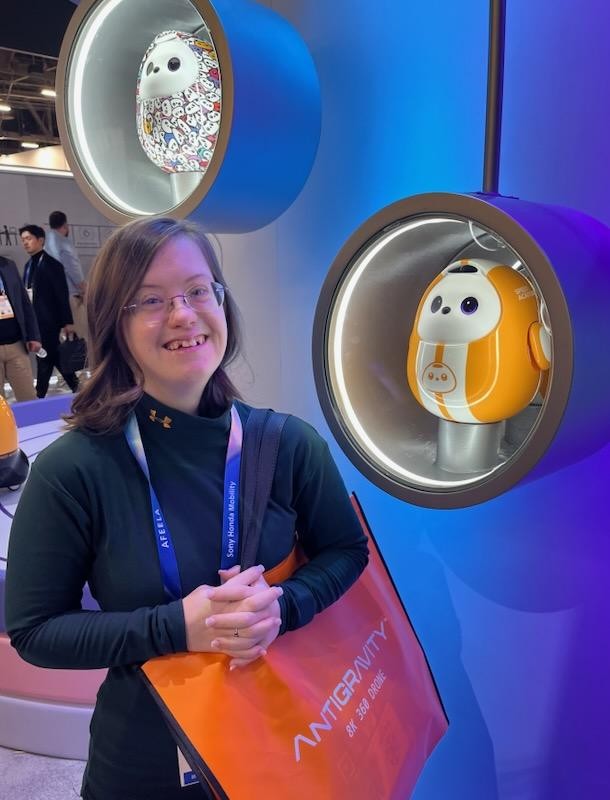
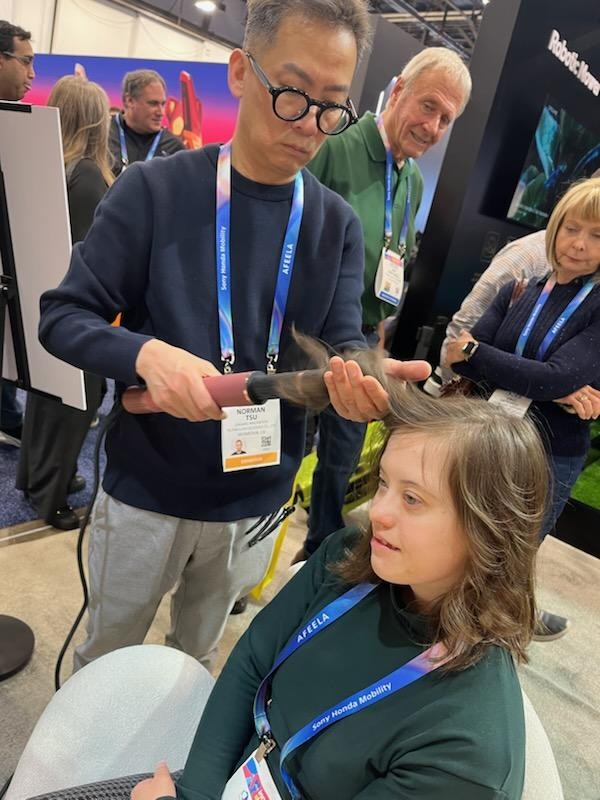
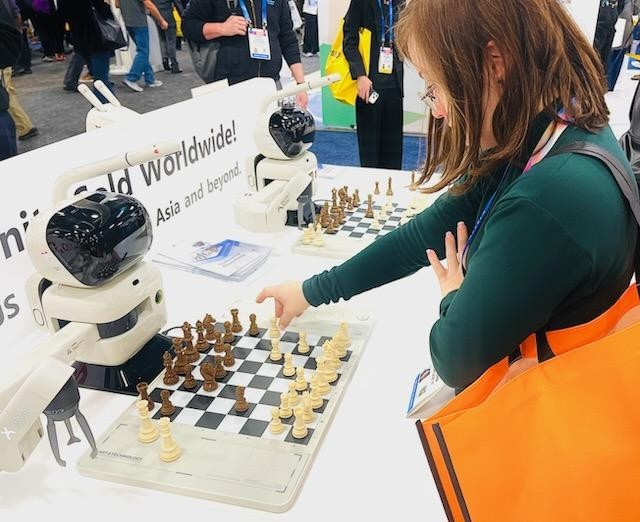
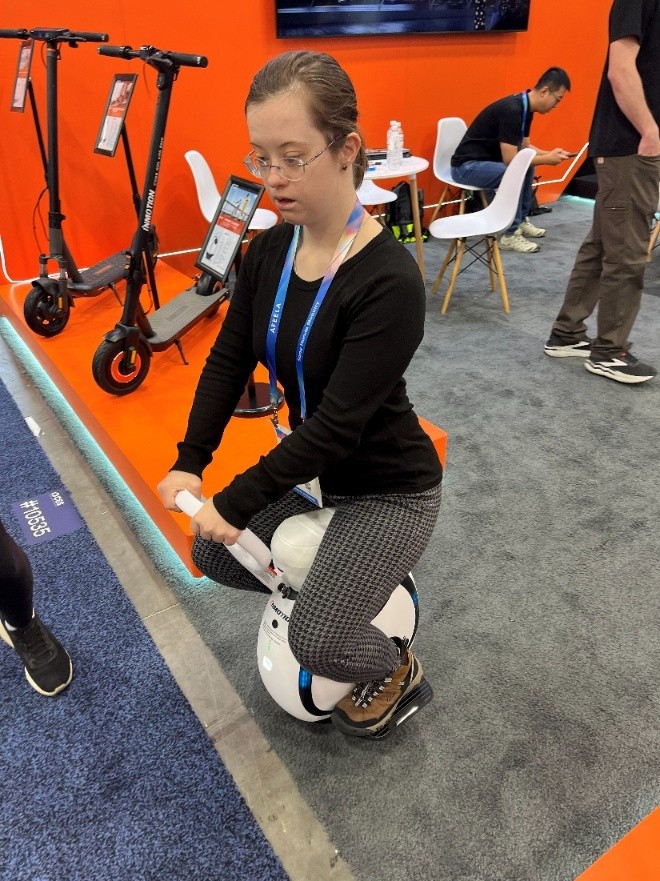
“Sarah liked the exhibits best because she could not only see the electrical cars, gaming technology, coffee-making robots, and other products up close: she could also try using them, and interview the personnel who exhibited them.” –Blanka
And in This Tunnel …
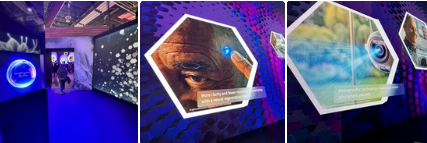
One other major exhibitor was the AgeTech Collaborative from AARP. Among other attractions and sessions, they shared a “tunnel into the future” and ideas for “aging without limits” technology.

One memorable aging-without-limits prototype: wearable exoskeletons that could enable users to continue strenuous physical activities indefinitely.
Whatever else comes with the next generation of AI and assistive technology, count on CES to keep showcasing the latest developments, every January in Las Vegas!