
(By Tara Rocha, BridgingApps Digital Learning Specialist)
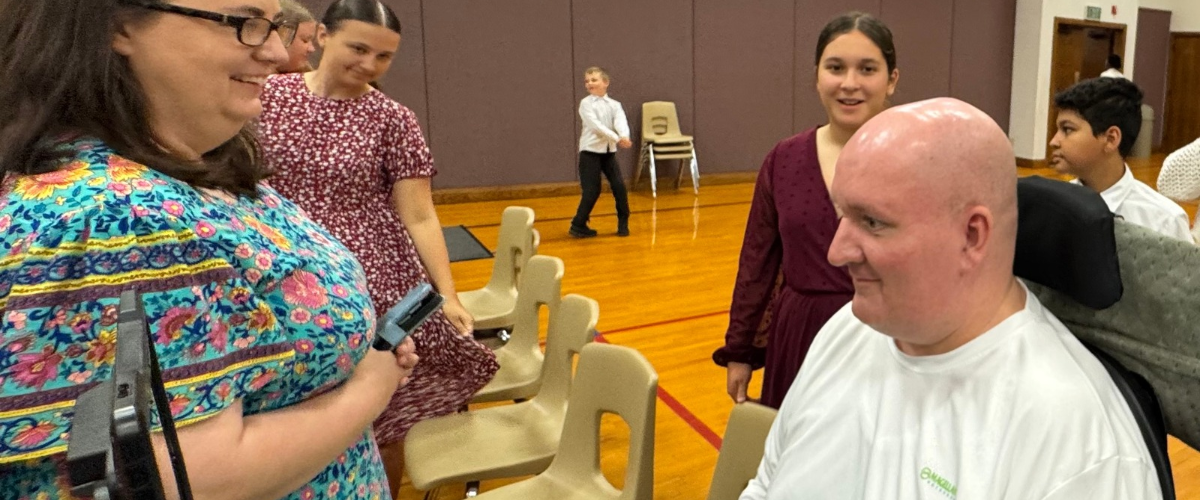
The “Scott’s Squad” Instagram stories, from Scott Butler, choke me up and make me laugh at the same time. He gave me permission to share his larger story with our readers.
The Diagnosis
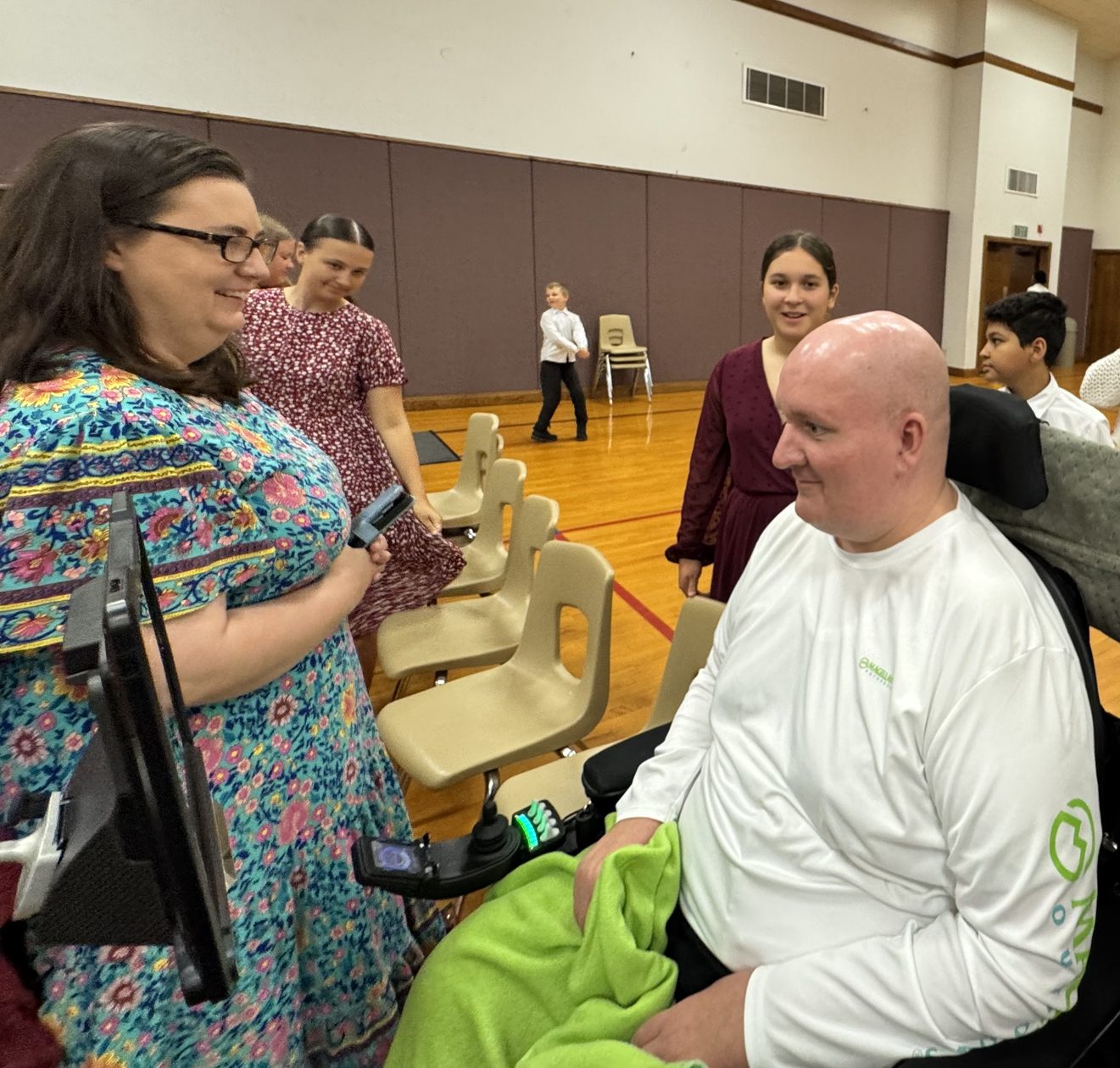
Scott and his wife Erin are friends, neighbors, and members of our church. In spring 2023, I was sitting next to Erin at a school awards ceremony (their daughter was 8th Grader of the Year, and my son was Athlete of the Year), and she told me that Scott wasn’t able to be there because he had a doctor’s appointment. He was having some tests done because he had started falling recently, and had noticed sudden muscle loss.
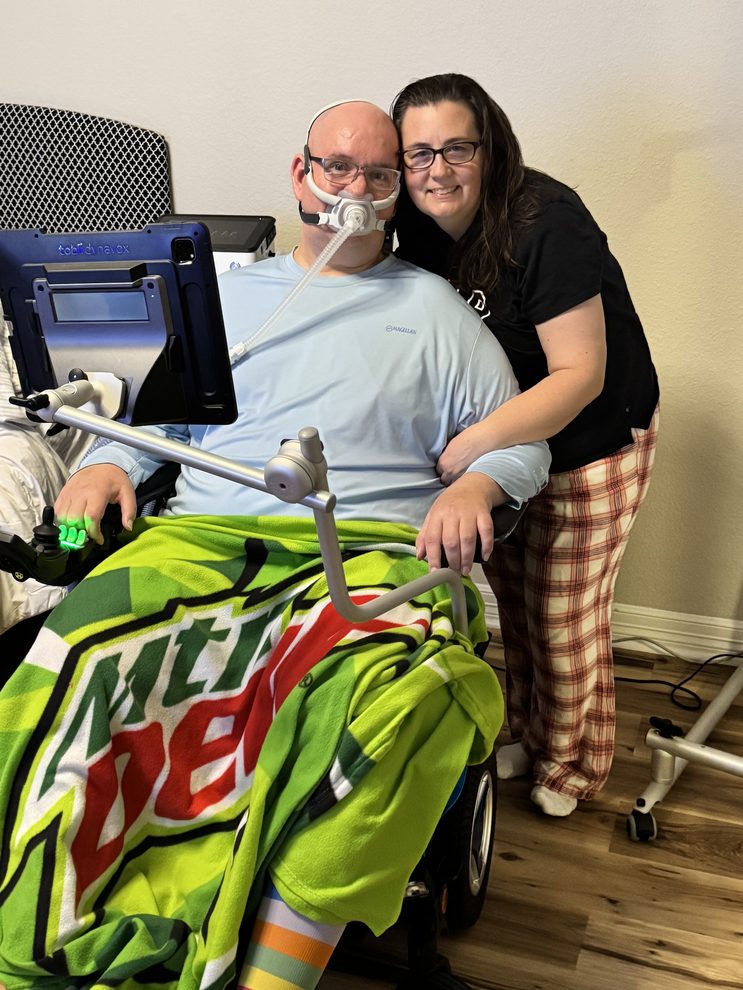
Little did we know that the diagnosis would be ALS—a terminal illness with progressive muscle failure. (See “Appendix: About ALS,” below.)
The Journey
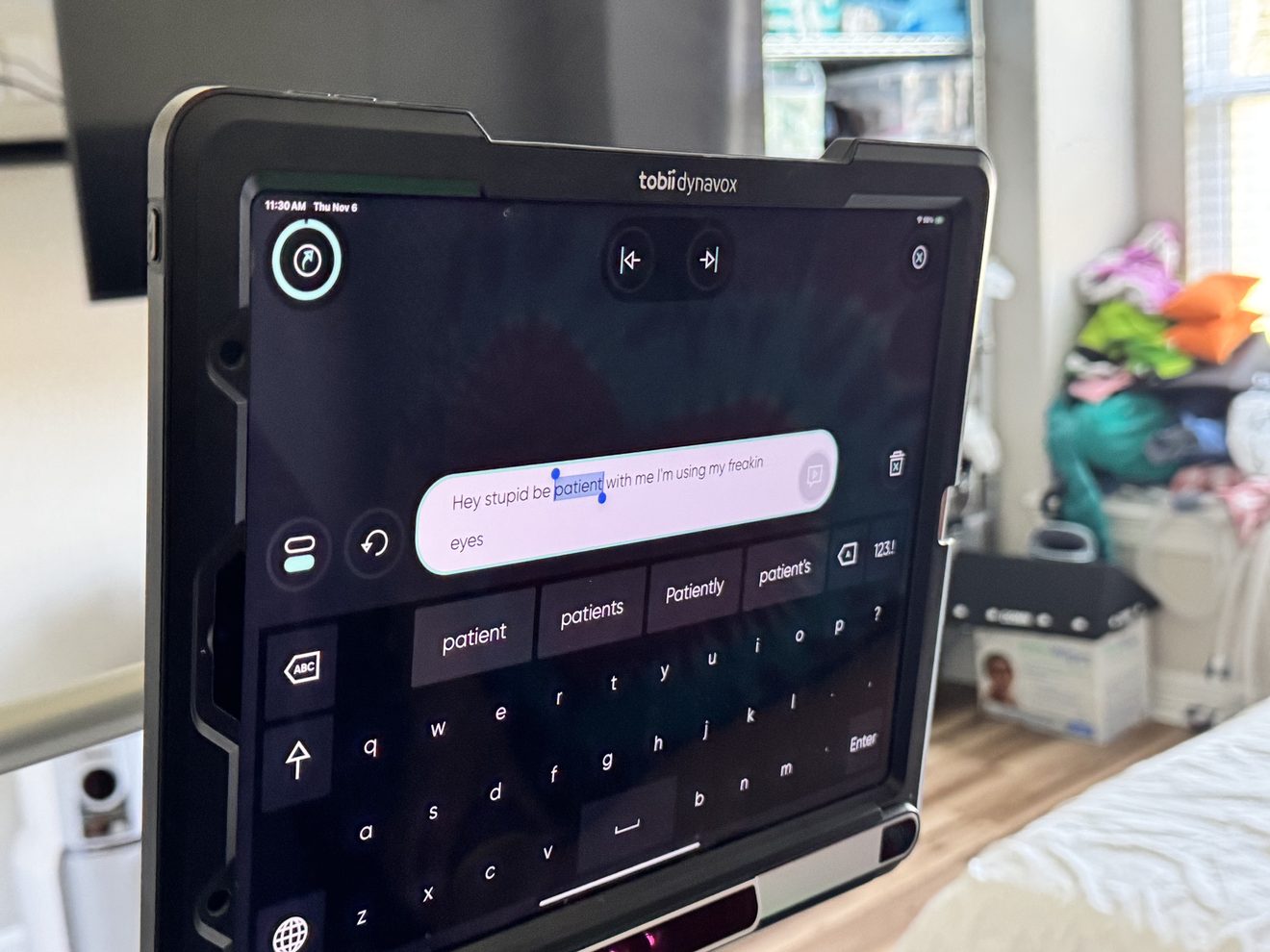
Since then, I’ve shared several BridgingApps articles and resources with the family. When they asked me about assistive-technology devices, I introduced them to Tobii Dynavox. There, they got personalized guidance and an iPad for AAC communication. Scott now uses a “banked voice”—a computer-generated voice, created from recordings of his original speech. (Acapela Group created the banked voice, and Team Gleason provided funding.)
What impresses me is how well Scott has kept his sense of humor throughout, and how committed he and his family are to generating awareness and inspiration for others.
The Technology
(For more on voice banking, see our article “Making Your AI Voice Truly Yours.”)
Tara: What was it like hearing your personalized, “banked” voice for the first time? Did it sound like you expected?
Scott: Even better. I was surprised how similar it sounded to my voice: it was surreal.
Tara: How has being able to use a voice that sounds like your own changed your daily conversations with family, friends, and caregivers?
Scott: It helps me keep the personal connection and identity. Anytime I have a personal conversation, it helps me connect emotionally with my audience.
The Personal Touch
Tara: Erin, what does it mean to you when you hear Scott’s own voice through his communication device, rather than a generic computer-generated voice?
Erin: Having Scott’s recorded voice has been such a blessing in our lives. When you are dealing with ALS, where just about everything is taken from you, it’s the “silly little things” that matter. Hearing his voice say good morning to our girls, say “I love you,” share one of his many silly phrases—it all brings a sense of normalcy into the chaos.
Tara: Scott, can you share a moment when using your Tobii Dynavox device with your personalized voice helped you express something important, something that would have been difficult to express otherwise?
Scott: Recently I spoke at a youth retreat and was able to share my story in my own voice. I feel that this allowed me to connect to the audience better than a mechanical voice would have.
Tara: What would you tell someone who has recently been diagnosed with ALS?
Scott: Do it now. Do not wait to ask about voice banking until your voice has started showing signs of weakening.
Appendix: About ALS
(by Katherine Swarts, BridgingApps Digital Content Writer)
- Common symptoms include: frequent stumbling and/or falling; difficulty holding/manipulating things; unexplained cramps or twitching; slurred speech; trouble swallowing; and breathing difficulties.
- The exact cause or causes of ALS is unknown. Most patients have no family history of the disease.
- Good physical health seems to reduce ALS risk. Many (though by no means all) patients are overweight; have a history of toxin exposure or head injury; or otherwise are at higher risk for a variety of health problems.
- People with ALS usually retain their physical senses (sight/hearing/touch/taste/smell), continence, memory, and thinking abilities. A significant minority experience frontotemporal dementia, which has a negative effect on inhibitions.
- Physical pain is rare in the early stages, but frequently develops as symptoms worsen.
- Most patients are diagnosed between ages 50 and 75, though it can happen much earlier.
- Typical life expectancy after diagnosis is 2–5 years. Some people live much longer: astrophysicist Stephen Hawking holds the record at 55 years (diagnosed in 1963 at age 21, died in 2018).
- Some people call ALS “Lou Gehrig’s Disease,” after the popular baseball player who died from it in 1941. (He was diagnosed in 1939 at age 36.)
- As yet, there is no cure for ALS. However, medication and physical/occupational therapy can slow its progress. Prompt diagnosis and treatment are important.