
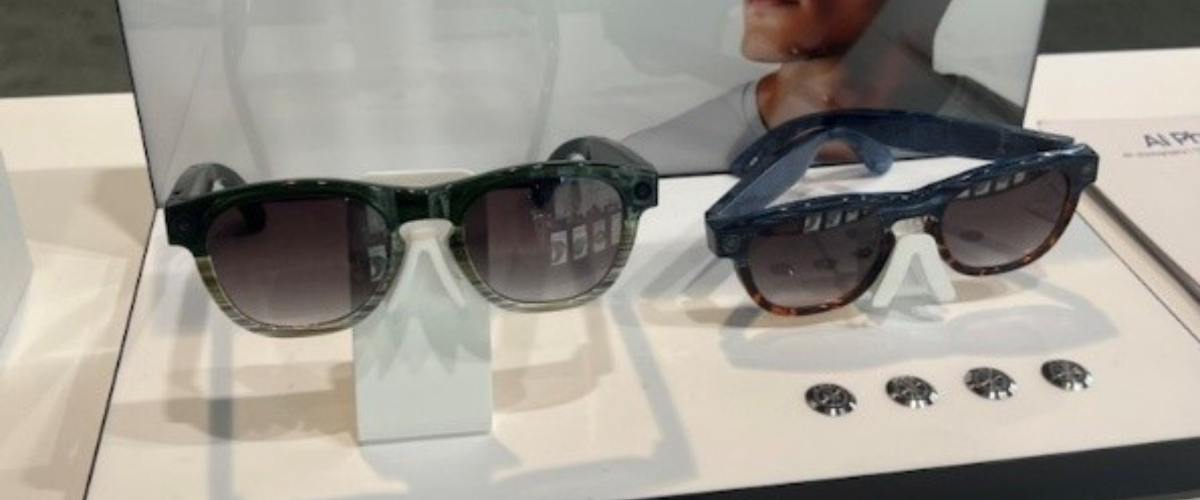
Follow-up to last September’s article “What Are Meta AI Glasses?” Created for hands-free digital access, Meta glasses have become common assistive technology (AT) for users with vision impairments. They can describe a user’s surroundings, send text messages, access the internet, and perform other digital-device tasks.
Alejandra “Ale” Gonzalez, our Digital Navigator at BridgingApps, shares today about smart glasses and client experiences.
It was in spring 2025 that I first had a client bring Meta glasses for technical assistance. As yet, we don’t have that brand in the BridgingApps AT labs, but several of my clients own a pair. I recently asked two clients about their experiences.
Through the Eyes of Meta Glasses Wearers
Q: How did you first discover Meta glasses?
Gayle: I found out about them through American Council of the Blind (ACB) community Zoom calls. (After that, I started getting on every Zoom call I heard about.)
Ava: I first learned about the glasses through Facebook; and I learned more from workshops by American Council of the Blind and other organizations.
Q: What are your favorite features?
Gayle: What I like the most is being able to identify items and read text.
Ava: I like being able to identify items in my kitchen, read my mail, and take pictures and short videos to send to my friends. I also like being able to connect with Aira, where I can get a live agent to help me.
Q: What features have you discovered (or have been added) that you didn’t know about when you started using Meta glasses?
Gayle: My first Meta glasses didn’t even have AI. They also lacked a basic accessibility feature that’s now available: you can let Meta know that you are blind, and may require additional descriptions of your surroundings.
Ava: When I first started using them, the AI feature was not included. And users couldn’t connect to Aira or Be My Eyes.
(Another recent addition: live translation in six languages.)
Q: What’s one thing everyone should know about Meta glasses?
Gayle: I would note that they occasionally make mistakes; for example, sometimes they do not get colors correct or read text with perfect accuracy. However, for the price, I think they do a great job. They have given me new independence.
Ava: These glasses are very helpful for allowing me to be more independent in life.
What’s Underappreciated, What’s New, What’s Coming
Unfortunately, most of my blind and visually impaired clients still don’t have their own smart glasses. Cost can be a problem, partly because Meta glasses weren’t created specifically for vision impairments. So they aren’t covered through most insurance policies, and it’s usually an out-of-pocket cost.
As AT goes, though, Meta glasses aren’t super-expensive. They cost roughly $300 per pair, less if you can get them secondhand. That’s pretty cheap compared to the best alternative I know, OrCam MyEye, which costs a few thousand dollars per pair. (So do XanderGlasses, though their primary function is live captioning for hearing-impaired users. Incidentally, Meta is currently working to develop its own caption feature.)
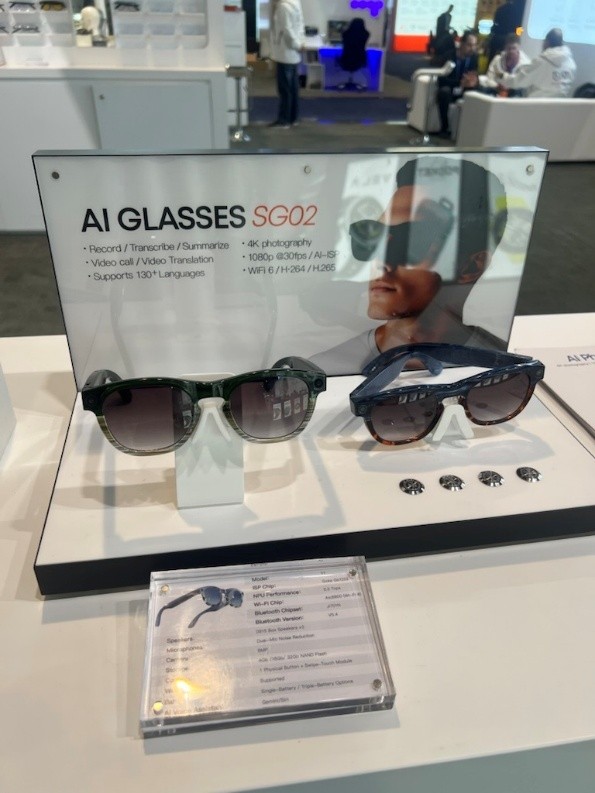
Even less expensive options than Meta are now on the horizon. At the annual Consumer Electronics Show (CES) this January in Las Vegas, I saw models from as far away as China: one Chinese brand had smart glasses starting at $200.
P. S. on CES
Watch for more on smart glasses and other new AI developments, in our upcoming series on CES 2026.
Conference highlights included the CTA Foundation Innovation Challenge, which was won by HapWare, developer of a wristband that syncs with Meta and other smart glasses to help wearers identify social cues. The HapWare team includes chief technological officer Bryan Duarte, who is (in the words of CBS News reporter Andrew Haubner) “one of less than two dozen individuals in the world who is fully blind and holds a Ph.D.”