
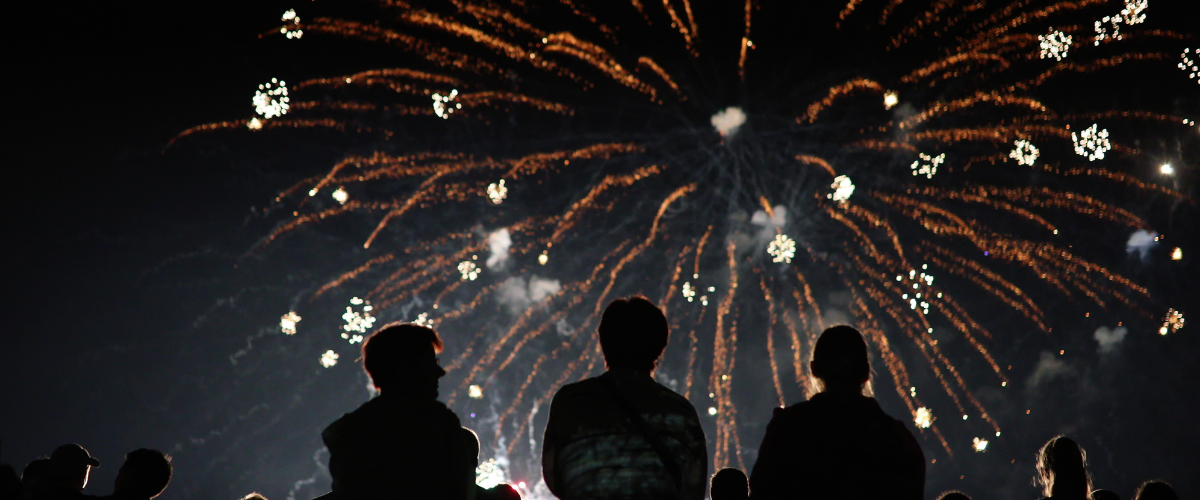
Note: Today’s article focuses on Independence Day because that was the big recent celebration. However, the information is relevant to most large-scale outdoor events.
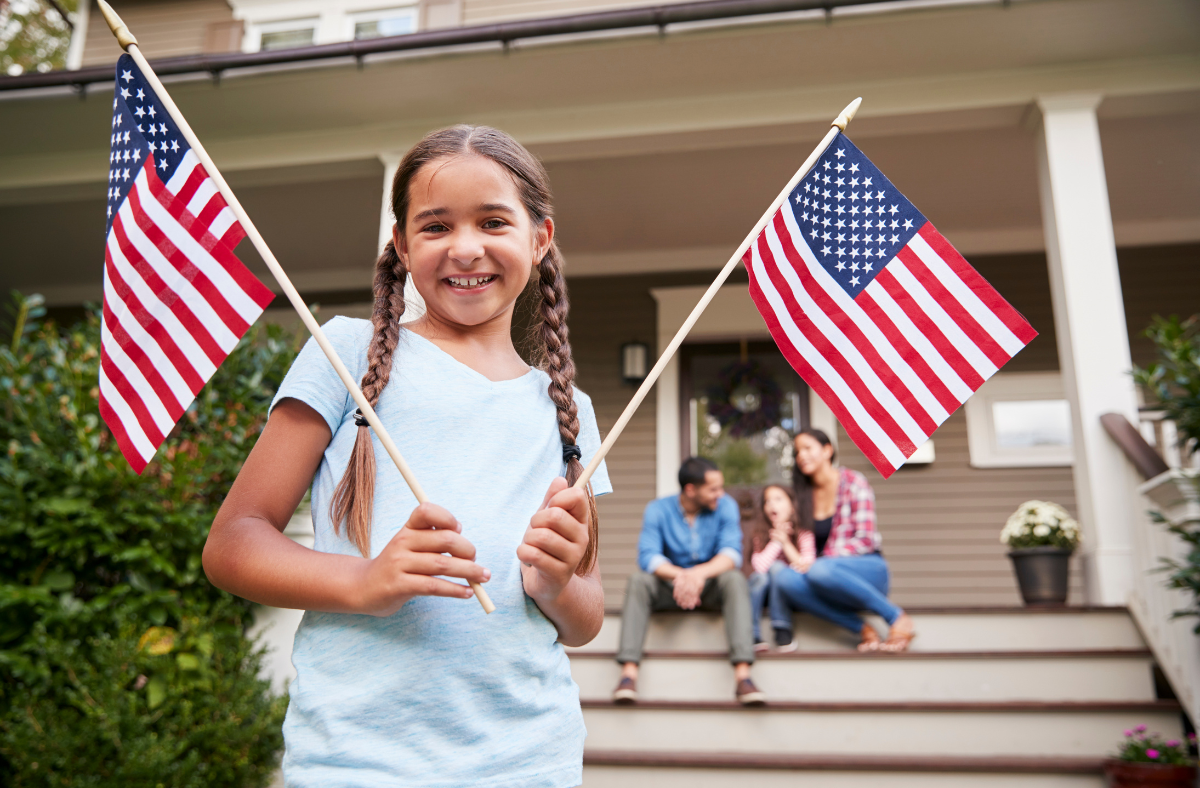
Even before the Declaration of Independence was finalized, founding father John Adams envisioned an annual celebration “with Pomp and Parade, with Shews [shows], Games, Sports, Guns, Bells, Bonfires and Illuminations from one End of this Continent to the other.” Which is still a pretty good description of a typical Fourth of July.
But what about Americans who aren’t typical—who get sensory overload from crowds, or seizures from fireworks?
Making Other Plans
Marjorie Reichard, a project manager for BridgingApps, knows about households where not everyone can handle a traditional celebration. “My family does July 4th very differently,” she says. “Because of my husband Tom’s PTSD and our daughter Olivia’s sensitivity to loud noise, we stay home. We usually watch a movie; and we have the typical barbecue, but nothing fancy.”
Many other families have found ways to enjoy a quieter Fourth at home. You can livestream national celebrations, play your favorite patriotic tunes, and eat hot dogs indoors. You can also:
- Read an American history book together.
- Parade around your own yard in red-white-and-blue, stars-and-stripes outfits.
- Create patriotic art with playdough, collage, paint, crayons, chalk, or whatever you have on hand.
- Bake red-white-and-blue cookies or cupcakes.
- Check our BridgingApps Summer App List for Kids (or the Summer Apps for Adults list) for more ideas.
When Outside Celebrations Get Too Close
Unfortunately, a big holiday usually means that your whole neighborhood is also celebrating—which can mean “spillover noise” problems. Marjorie Reichard notes: “We live near a park that usually does fireworks, so Tom always heads to bed early. Hopefully, he will be asleep before the fireworks start.”
Since few people can sleep through a fireworks display that easily, you’ll probably need assistive-technology backup: white noise, blackout curtains, noise-cancelling headphones. (The myNoise app is a popular option.) You can also use “sensory pop-up tents,” which are specially designed to block outside stimulation.
The Big Party
If you still want to join the community celebration, feel free to do so. With a little planning, your family can enjoy it without risking meltdowns.
Check in advance and clarify:
- Whether parking areas and restrooms meet your accessibility needs.
- Whether uneven ground or muddy spots might cause problems. (Remember that most public-park events set up some activities in unpaved areas.)
- Where the noisiest areas (e.g., music stages) and quieter spots will be.
- Whether indoor facilities, designated “sensory zones,” and/or pop-up sensory tents will be provided.
- If food-truck lines and other “standing” areas will be able to accommodate visitors with mobility problems.
Other “celebration hacks”:
- Bring your own drinking water, insect repellent, sunscreen, and snacks. You can’t always count on finding exactly what you need onsite.
- If you’ll be out in the sun, especially near midday, wear wide-brimmed hats.
- Remember that the end of a big event (especially one that concludes with fireworks) usually means a mass exodus of crawling traffic. If you can’t or don’t want to leave early, make sure to have time-passing activities for anyone who might get antsy in the car.
P.S. Be Kind to Animals
Few pets would choose the Fourth of July as their favorite holiday. Dogs and cats have very sensitive ears compared to humans; fireworks and other extensive noise can stress even trained service dogs. If your dog isn’t a service animal, he or she might prefer staying home.
Whatever your household is doing for the next summer celebration, here are some basic pet-safety tips (you can also ask your veterinarian or local SPCA):
- Give your pets the quietest room (or private crates) in the house.
- If you have guests, or will spend much time going between inside and outside, be especially careful of indoor pets. Even if your cat has never shown interest in the outside world, a sudden bang can startle any animal into bolting through the nearest opening.
- If your pets are really jumpy, consider swaddling them for a calming effect. Special weighted garments are available for dogs and cats.
- Don’t feed your pets picnic-table snacks except in small amounts, and only if you’re positive it’s “safe food” (many common human snacks are toxic to animals).
- Keep potentially dangerous objects and substances away from your pets. Dangerous objects/substances include alcoholic drinks, citronella candles, glow-in-the-dark jewelry, firecrackers (including the “leftover pieces” after firing), and any open flame.
—–
In closing: Don’t ever worry about what “everyone else” does, and don’t feel bad about saying “no thanks” to an invitation. An important part of freedom is being able to enjoy yourself in whatever way suits you.