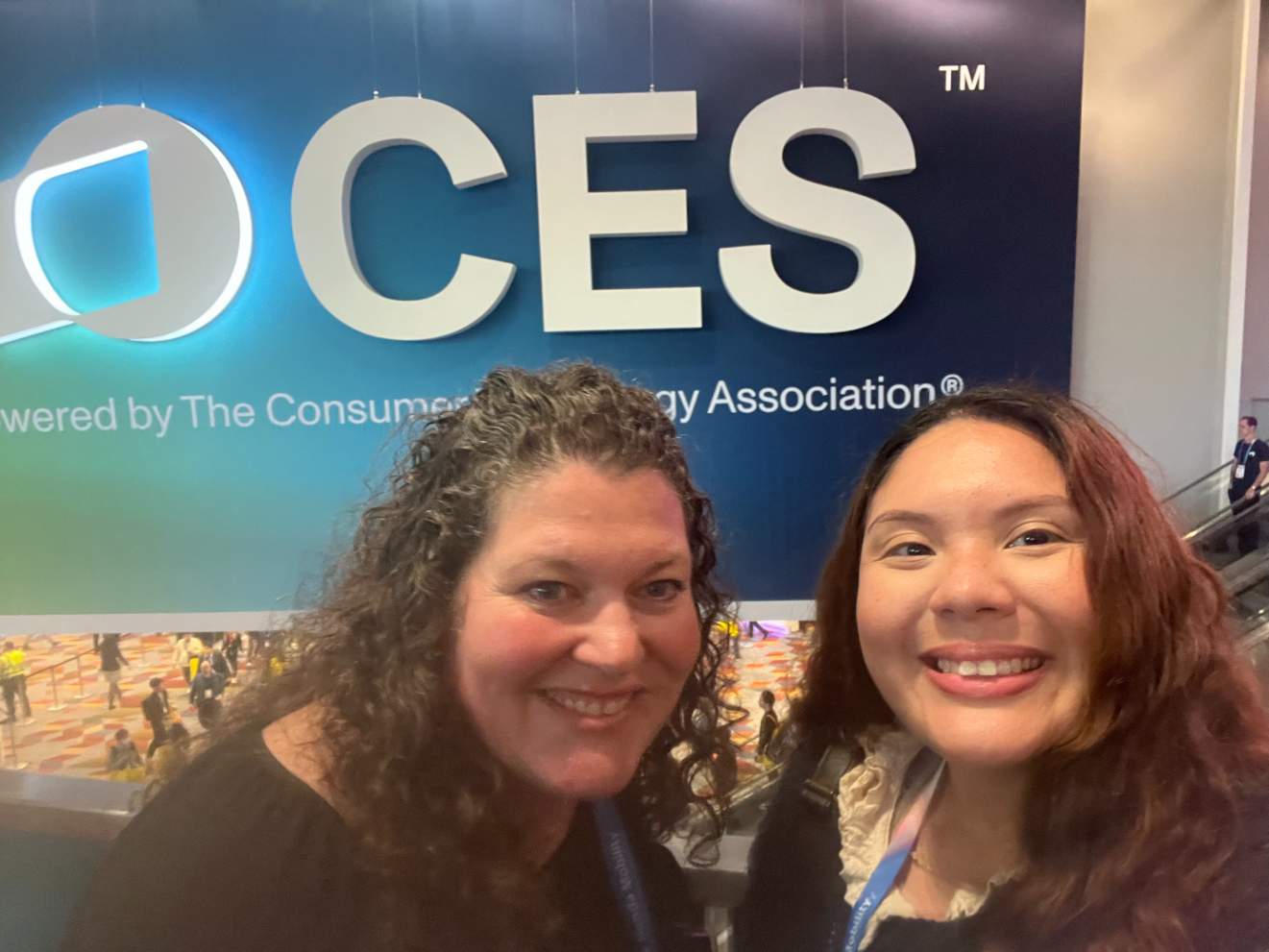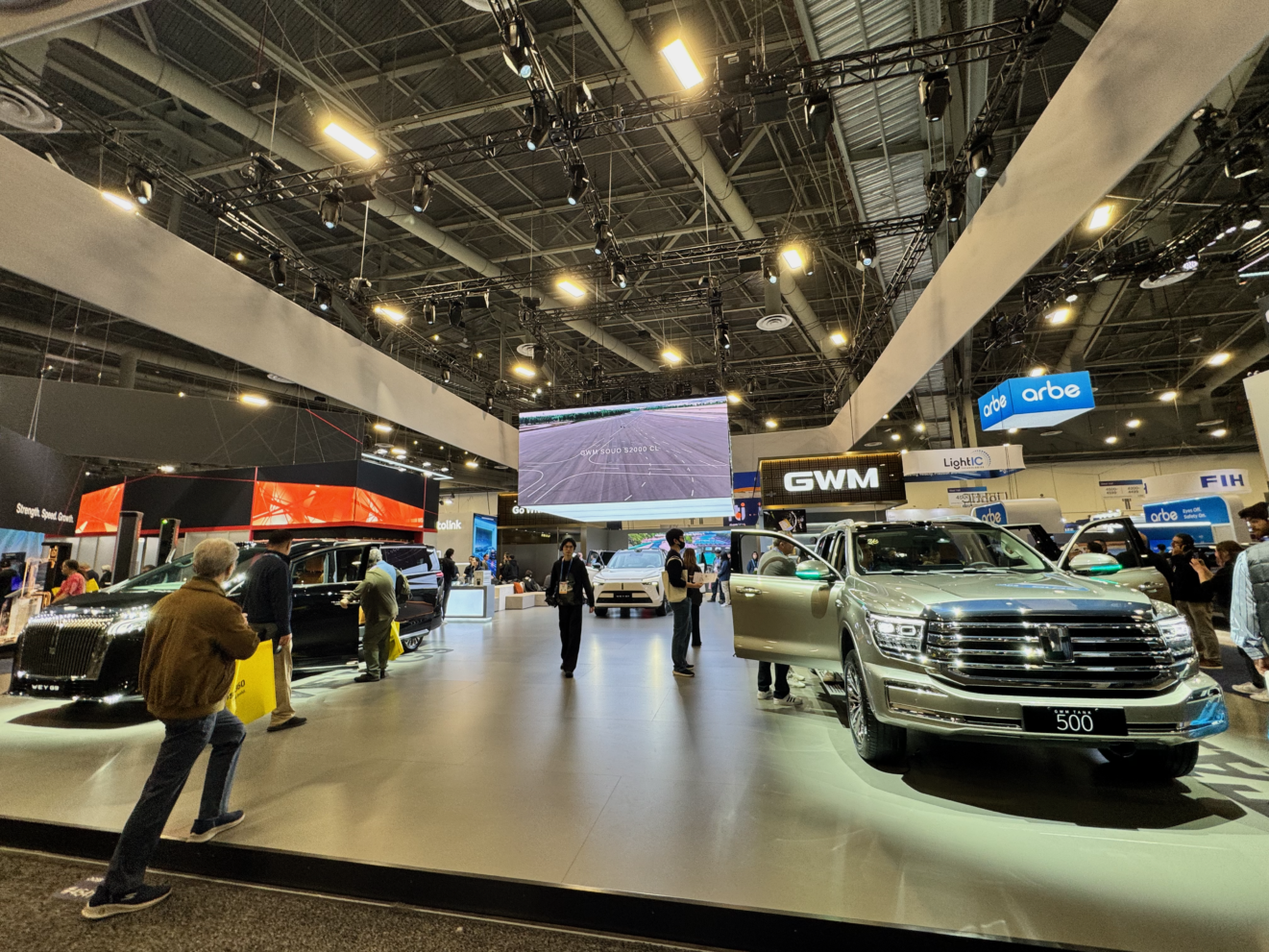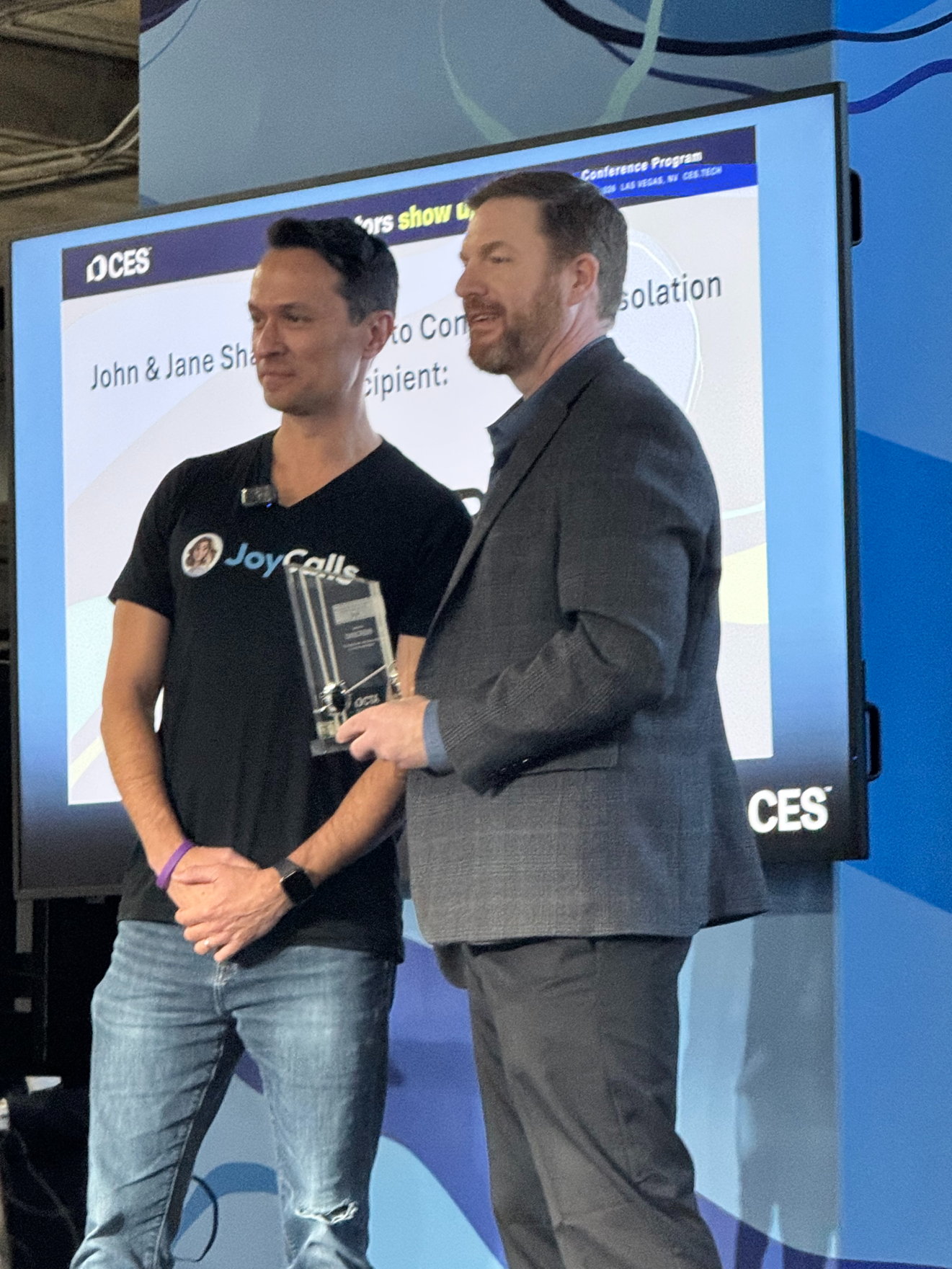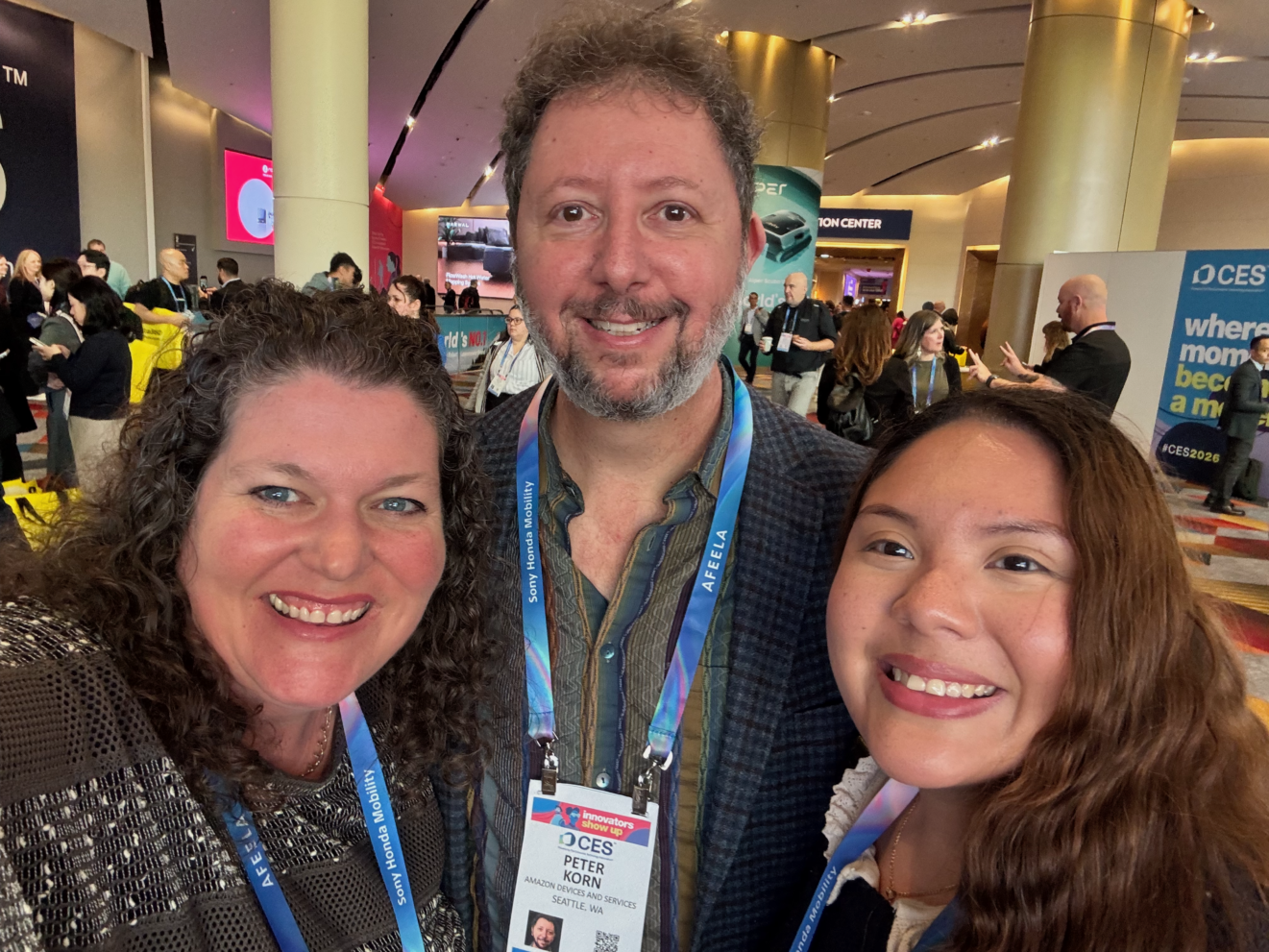
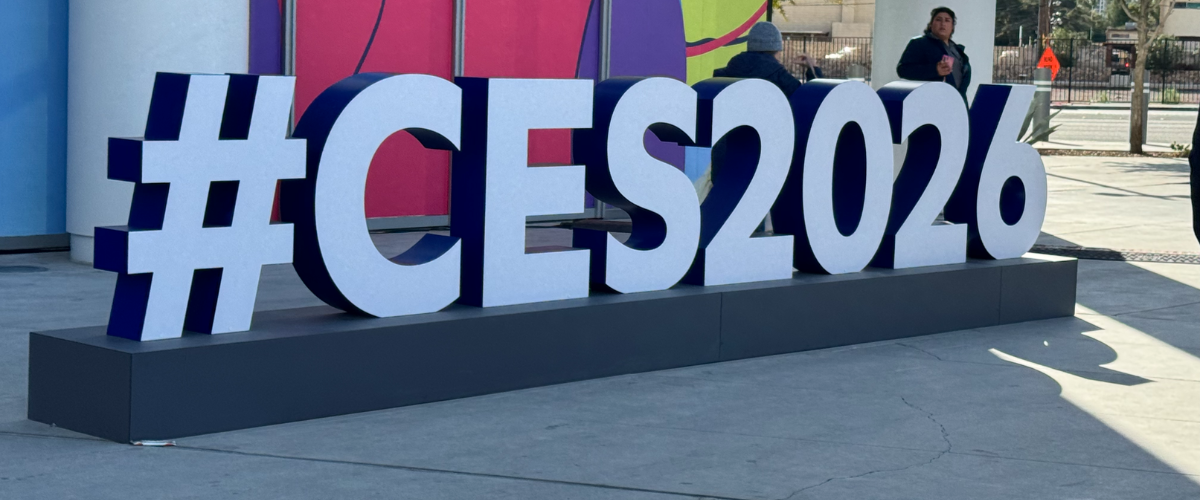
BridgingApps loves to attend the annual Consumer Electronics Show (CES) in Las Vegas. Thanks to generous support from the Consumer Technology Association (CTA) Foundation, three of our team were able to go this year (January 6–9):
- Cristen Reat, BridgingApps Co-Founder and Program Director
- Tara Rocha, Digital Learning Specialist
- Alejandra “Ale” Gonzalez, Digital Navigator
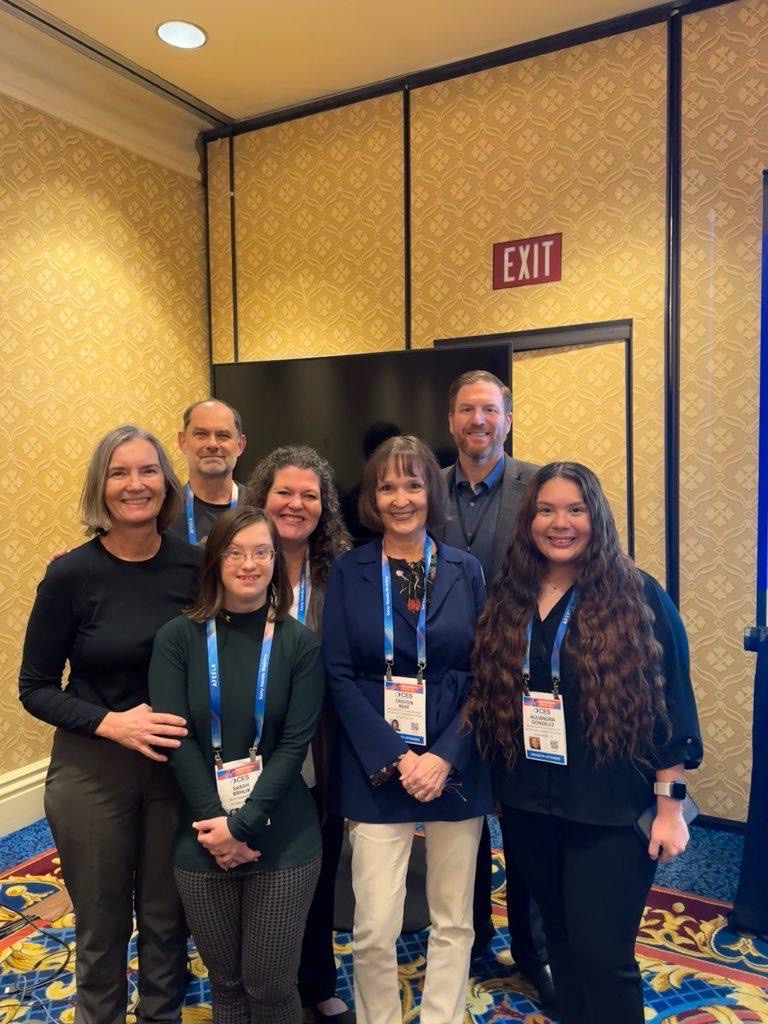
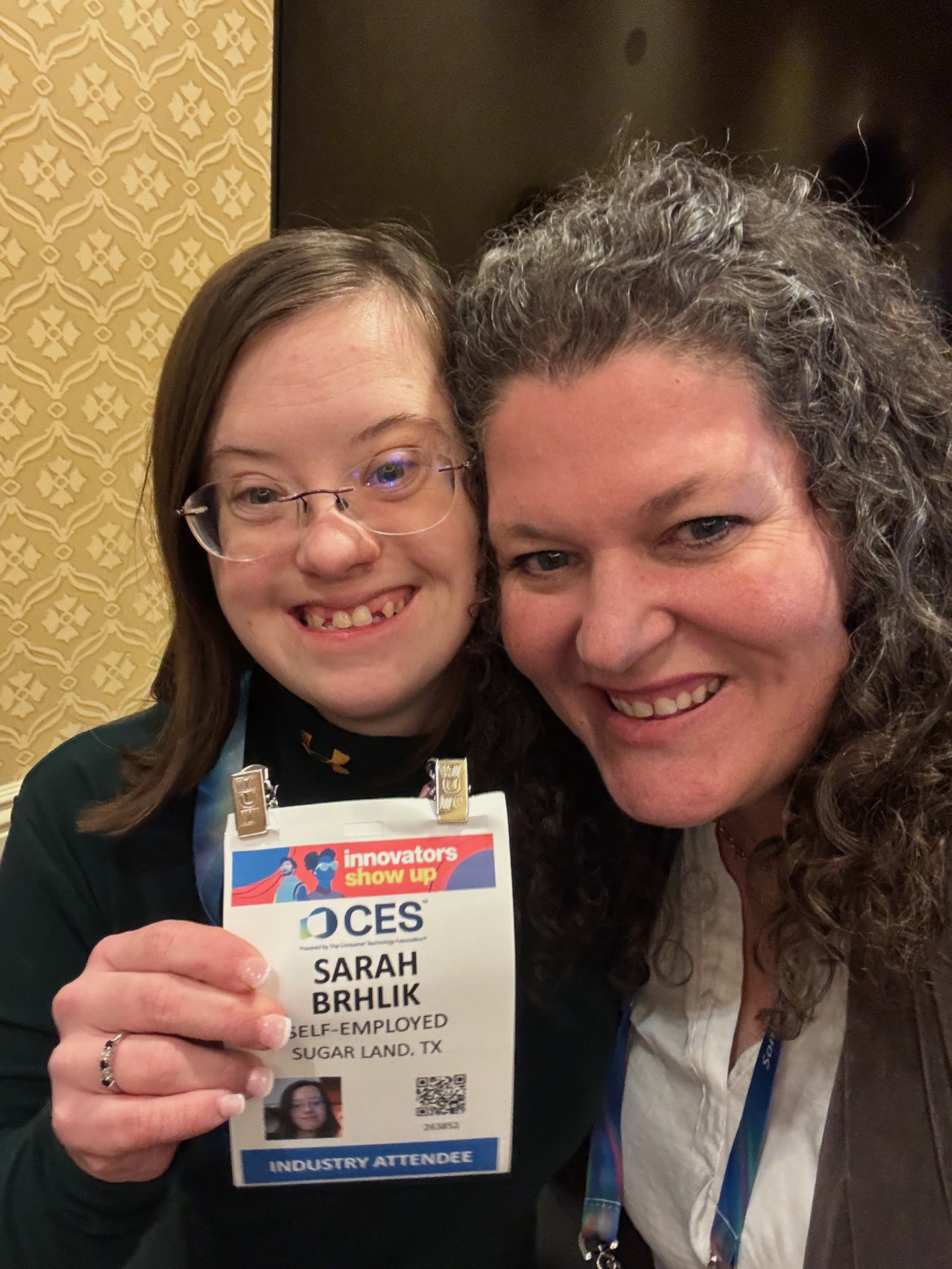
They were accompanied by a BridgingApps client family from Houston: Sarah Brhlik (“BUR-leek”), a young adult with Down syndrome, and her parents.
Today, our team members share their favorite parts of the CES experience. Over coming weeks, we’ll be covering the exhibits and events in more detail.
Q: What Stood Out for You?
Cristen: It was real excitement for me personally, to see a new focus on individuals with intellectual and developmental disabilities [IDD]. Having the Brhlik family along made that experience truly memorable.
The top things that stood out to me were:
- The grand opening of the Accessibility Stage, which featured panel discussions on universal accessibility. (Accessibility in general seemed more mainstream than in previous years.)
- Products incorporating AI were everywhere.
- Standout technology: Lotus Ring, a finger wearable that allows users to control appliances by pointing at them. It works without an app, Wi-Fi, or much setup.
Tara: I really enjoyed the energy of the Startup Stage: it was exciting to see emerging companies present their ideas, Shark-Tank-style; and it was exciting to vote on those ideas with the rest of the audience. It was impressive to see the levels of thought and preparation behind each project. Even more meaningful was the opportunity to speak with many of the teams at their expo booths.
Ale: The top three things that stood out to me:
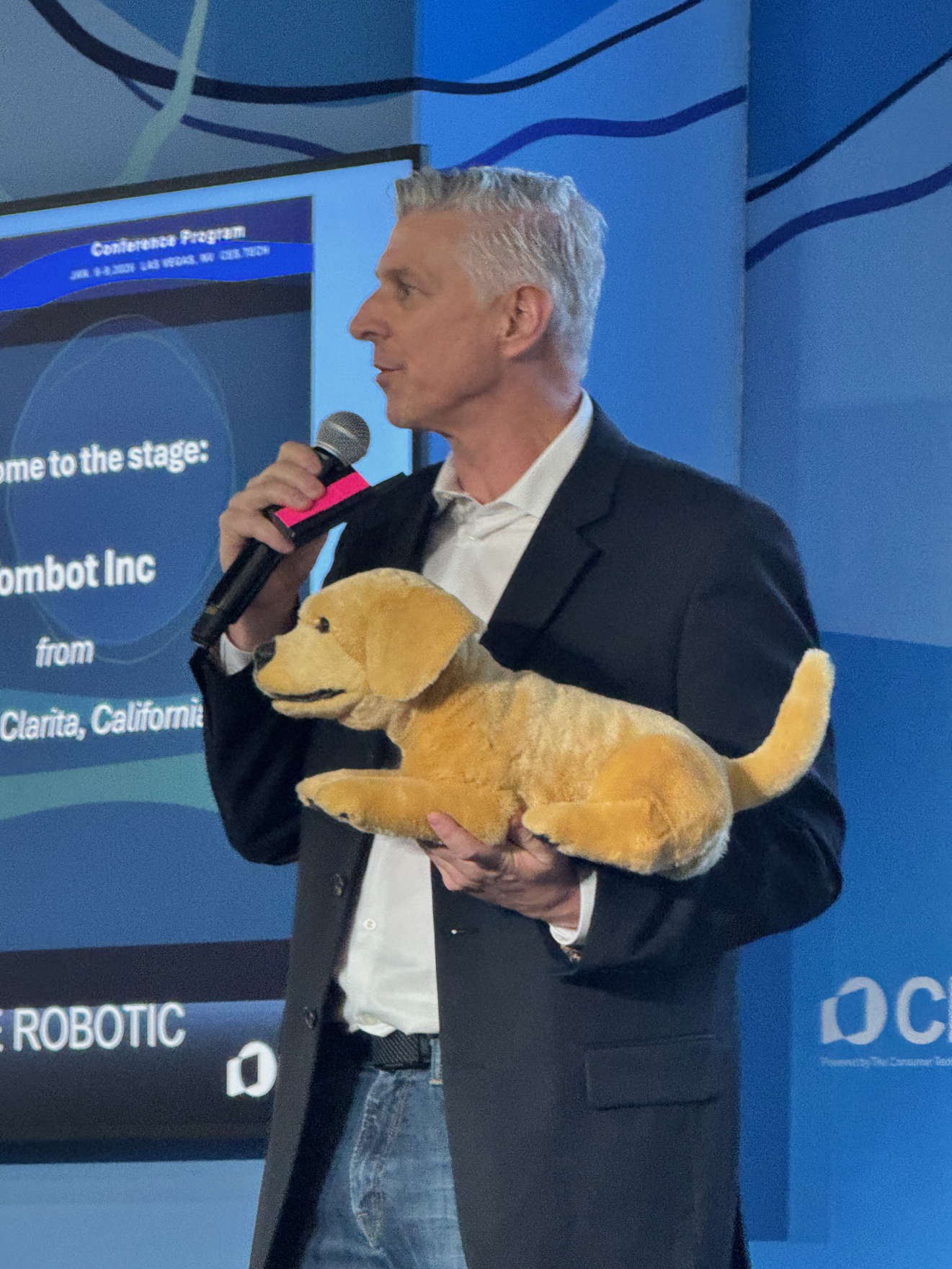
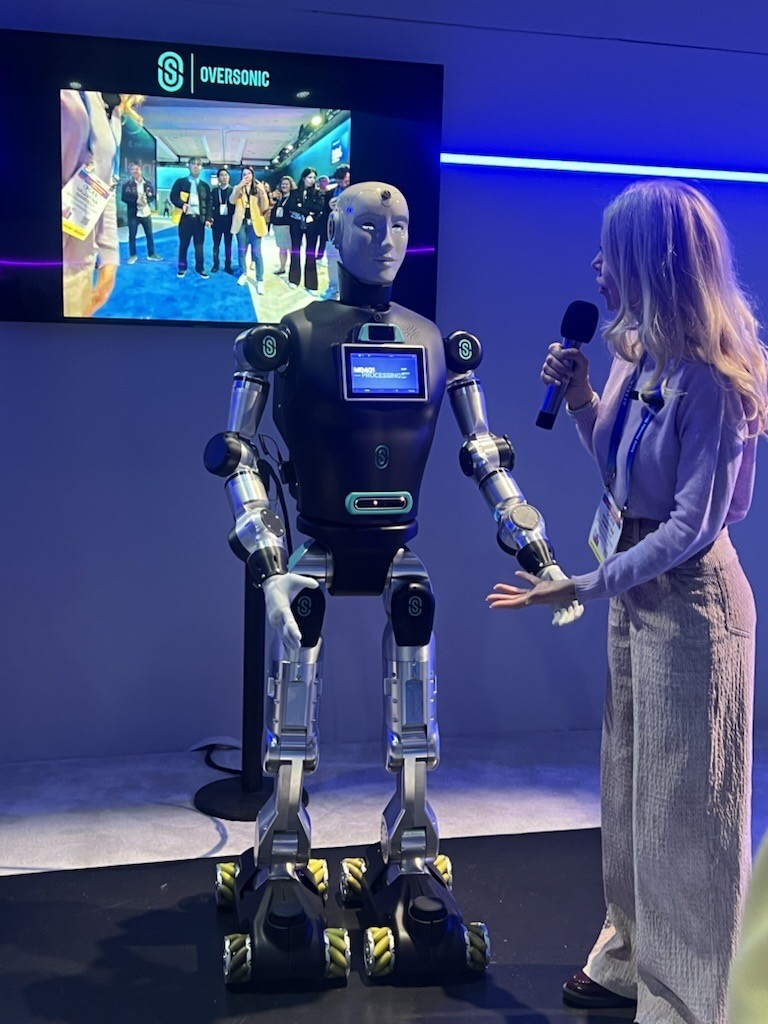
- The different types of “dog robots” created for companionship.
- The Atlas robot by Boston Dynamics.
- The number of accessibility sessions available! The opening of the Accessibility Stage led to so many panels.
Q: What Were Your Favorite Expo Booths/New Technologies?
Cristen:
- Nodi, a screen-alternative device for kids aged 4–12, which will launch in the U.S. this summer. After parents download an app dashboard, Nodi allows kids and parents to transmit audio messages to each other. There’s a language-learning feature built in, also a Spotify connection so kids can listen to music.
- Y-Brush, an innovative toothbrush with a mouth-like shape that fits kids and adults. Similar to Curaprox, but at a third of the cost. Recommended for users with hand function challenges and/or cognitive disabilities.
- Xandar Kardian, a sensor device that installs on bedroom walls to record health data while the user is sleeping, no physical contact required. In May 2026, it will incorporate a sleep apnea detector—a huge innovation that could revolutionize apnea diagnosis in people with touch sensitivities. (Traditional diagnosis requires patients to sleep for 6–8 hours with electrodes all over the head.)
Tara: Until attending CES this year, I hadn’t realized how global the conference truly is. I appreciated seeing the contributions different countries are making as technology and accessibility advance worldwide.
We discovered a Canadian startup with an app called eeva, designed to help people use “brain dumps” as a tool for staying organized and on track. I downloaded that one on the spot! I plan to spend the next few weeks learning to use it for improving my own organization and workflow.
Ale: My three favorite expo booths:
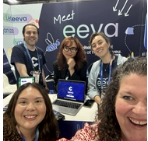
- eeva, the household-assistant app that utilizes AI to organize your ideas into tasks and schedules. (See also press release, “eeva Launches All-in-One Home and Life Management Platform to Alleviate the Mental Load.”)
- LOONA Deskmate, with a stand that can turn any smartphone into an AI workmate.
- HapWare [winner of the Health Innovation Challenge, described below], a haptic wristband that pairs with smart glasses to translate non-verbal communication cues. [For people with visual and/or neurological disabilities, who often have difficulty catching what others say with facial expressions and body movements.]
Q: What Did You Like Best About the Health Innovation Challenge?
(The CTA Foundation Health Innovation Challenge, new this year, emphasized assistive technology for adults with IDD. Our next CES post will discuss the Challenge in more detail.)
Cristen: My favorite part was the specific focus on the IDD population, a group I’ve found to be underrepresented in commercial-technology innovation. This event was so well planned, and included really innovative tools for positive impact—that was the most fabulous thing ever to me. As a parent of an adult son with IDD and other disabilities, I am always looking for technology that can be used for the benefit of this population.
Ale: A HapWare co-founder is blind. The founder of Daivurjnt [an app for managing sensory-overload issues] has autism and struggles with overstimulation. I loved seeing how many innovators used their personal challenges to create solutions that could be used by everyone.