

My kids packed their own lunches starting in preschool. One day, my daughter’s teacher called in a panic: “Kate’s ‘lunch’ is nothing but strawberries!” She expected me to rush over with extra food, and was seriously surprised when I said Kate would be all right. Adults have a tendency, especially with disabled kids, to “protect” them from the natural consequences of their actions. But Kate didn’t starve, and it was a great learning experience: that mistake never happened again.
–Amy Fuchs, BridgingApps Program Manager
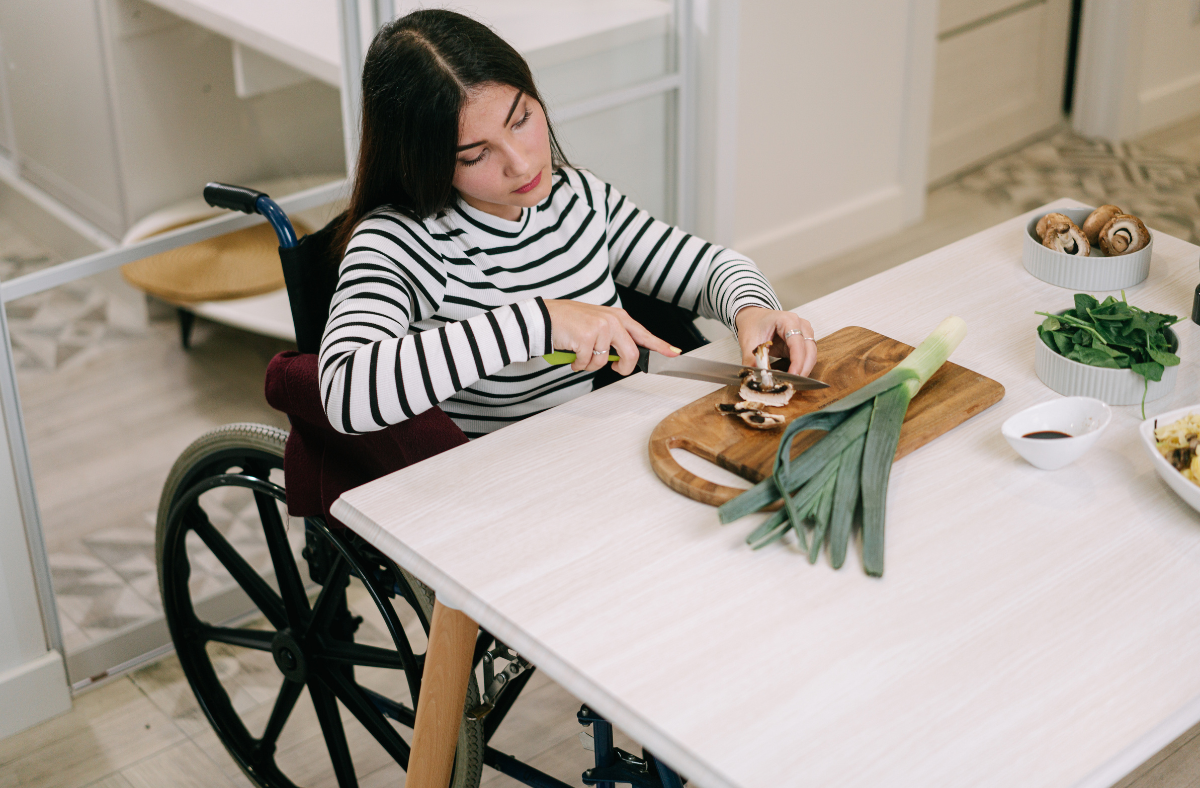
Never Say Never
Not that long ago, it was taken for granted that children with disabilities would be dependent for life, incapable of ever learning useful skills. And many in fact learned little, but only because others assumed it would be a waste of time to try teaching them.
Today, “lifelong dependence” assumptions take kinder, but still stifling, forms. Parents, naturally protective of their children, have to find and walk a line between legitimate protection and overprotection. And it doesn’t help when co-parents, relatives, peers, or teachers try to impose their own standards of protection—often without considering whether those standards really fit an individual child’s needs.
Tips for countering “don’t ask too much of your disabled child” attitudes:
- Observe, and listen to, your children. Note what they most enjoy doing and what they’re good at. Help them explore learning opportunities in these areas.
- Remember that recommended ages (and “sensory-friendly” labels) are guidelines, not universal laws of nature.
- Even with meltdown-prone children, don’t try to shield them from the natural trials and errors of learning. It will hurt them worse to grow up doubting themselves because grownups keep saying “that’s too hard for you.”
- Also, encourage self-advocacy. Rather than always clearing the way for your kids, help them find age- and ability-appropriate ways to speak up for themselves.
Appropriate Digital Tech
Digital technology (assistive or otherwise) has some additional guidelines:
- Before getting your child a personal device, check that its overall features fit the child’s ability to operate controls and figure things out. If physical meltdowns are a possibility, also consider whether the device can withstand being slammed down and pounded.
- Have appropriate parental-monitoring and access-sharing controls in place. Do, however, explain these to your children and allow them some input on privacy preferences. You want to send the message “I’m your backup,” not “I don’t trust you.”
- Know about official media ratings, regulations, and laws—and not just those for your own area. Laws on digital access for minors vary from country to country, state to state, and even between neighboring municipalities. Plus, established laws are frequently debated and updated. (For more information, see “Texas bill to ban minors from social media likely dead after missed deadline” from NPR–KERA News, and “Countries That Have Introduced Social Media Age Restrictions” from Tech.co.)
Also, do encourage kids to explore the three-dimensional world beyond their screens. Digital options are important tools, but they can only take a person so far.
Closing Notes
- It’s not only disabled children’s families who contend with overprotective attitudes; and parents have been accused of “child endangerment” for leaving youngsters briefly unsupervised. Be clear on your rights and the actual laws for your area.
- Remember, adult peer pressure doesn’t have the force of law. Don’t let “what others think” keep you from doing what you know is best for your child.
- If there’s an actual shortage of opportunities for your child to explore, look into organized kids’ programs. Your school, public library, or social worker should be able to advise you.
And, hard as it is, you need to accept that you won’t be able to keep your children 100 percent safe all their lives. Better to focus on strengthening the resources they always carry with them: their own initiative, confidence, and resilience.
Recommended Resources
- 5 Signs You’re a Lawnmower Parent—and Why You Should Avoid This Parenting Style (article from Parents magazine)
- Grit: The Power of Passion and Perseverance (book by Angela Duckworth)
- The Self-Driven Child: The Science and Sense of Giving Your Kids More Control Over Their Lives (book by William Stixrud and Ned Johnson)
- TexasYouth2Adult and VirginiaYouth2Adult (websites for young adults moving toward independence)
- Touch Grass (app)